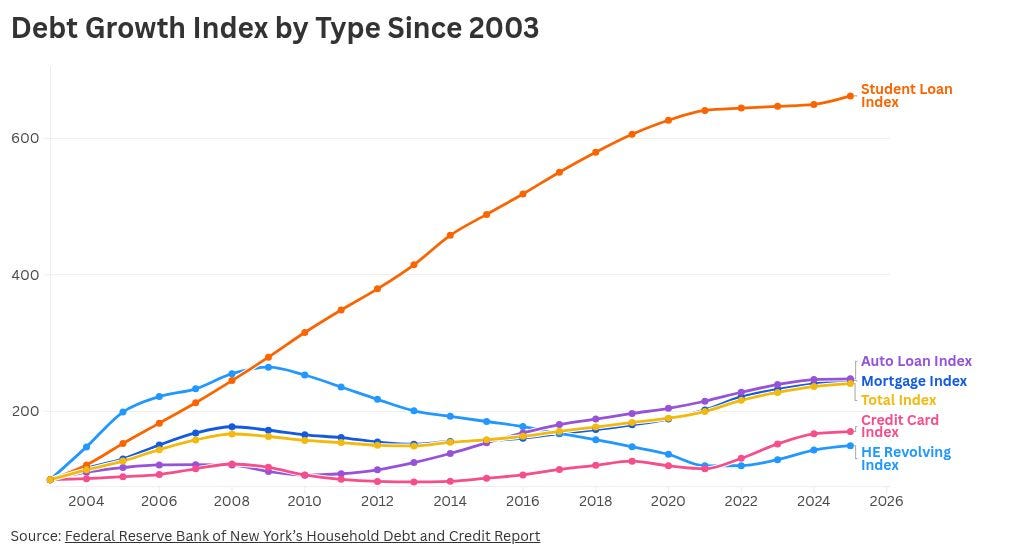
The student loan crisis is a big problem. The current amount of outstanding student debt is 1.833 trillion dollars, about 5.8% of US GDP. That’s a lot of money, and such a large sum languishing in debt has observably negative effects on portions of the economy. At a time when purchasing a home, starting a family, saving for retirement, and similar consumption patterns are encouraged and deemed societally beneficial, young people are forced to pare back consumption and delay these financial milestones to pay these loans. In addition, the high cost of student loans can be a barrier for many low-income students. Independent of the very real financial burden of taking on loans, debt carries with it a deep psychological weight; psychological aversion to the mere idea of “being in debt” dissuades many prospective borrowers, restricting access to higher education. Most importantly, student debt restricts the career options available to many students after graduation. Instead of being able to pursue jobs that they deem personally fulfilling or societally beneficial, students are forced to take those that pay the most money.
Student debt can be viewed as a fair investment in future financial prosperity. It makes sense that a doctor, lawyer, or accountant must pay a large sum upfront for an education that leads to a much higher income. This is why universal student loan forgiveness can be regressive: those with the highest incomes can also have the highest levels of student debt, having invested large amounts of money in an education that has already returned that investment tenfold. However, many careers do not offer the same return on investment. Public defenders, teachers, and bureaucrats also require high levels of education, but do not receive wages high enough to offset the often-exorbitant cost of that education. Students must be given the opportunity to free themselves from the dictates of income, which high-cost education has made the sole criterion for career choice. We should allow students the ability to choose public service over private profit. But how?
I am not the first person to notice this problem. Free college, loan forgiveness, and the impact of student debt on job choice have been central to discussions of American higher education for decades. In recent years, that conversation has only grown louder – even Joe Biden came out in favor of partial relief. There have been numerous proposals and program designs put forth to try and address the student debt crisis and the rising cost of higher education, but all have fallen short. The most famous and expansive of those plans are probably those of Bernie Sanders and Elizabeth Warren. Both politicians proposed to essentially reduce tuition at public universities to zero by expanding the universal tuition subsidy (which currently sits near 60%). They also proposed expanding means-tested Pell Grants as a means of reducing the impact of cost-of-living on low-income students. While the goals of these proposals are worthwhile, the program designs remain deeply flawed. For one, they provide a baffling combination of universal and means-tested programs, essentially incurring most of the costs of universality while still imposing bureaucratic barriers in the form of red tape and endless forms. Second, the absence of tuition as a funding mechanism may jeopardize American universities’ ability to expand and maintain high educational standards. The United States has some of the best public universities in the world – leaving their ability to fund educational improvements at the mercy of shifting political winds may be disastrous. You don’t have to look further than the actions of the Trump administration in just the last year. Colleges are already dependent on substantial government aid, and this dependence can prove costly under a hostile administration. Even under a non-hostile administration, there can still exist pressure to reduce higher-education funding, as has happened in France’s university system. In addition, these proposals offer little oversight to ensure that colleges themselves work to reduce student expenditures while maintaining performance. The rising cost of attending college in the U.S. is driven by many external factors that also require addressing, from administrative bloat to perverse incentives for non-educational spending aimed at increasing enrollment. A well-designed program for free college must include effective means of confronting these problems.
Free college faces another, more fundamental, problem: universal higher education is not a pure societal good. Every American attending four years of free college, without further stipulations, would yield negative economic and social effects. What degrees should the government incentivize? What skills are the most in-demand and useful for the future of the country? There are many people who do not want to go to college and would be more effective taking other paths, and there are certain paths that the government should push more people towards. We need more public school teachers, civil engineers, and librarians. The government should probably be focusing on funding programs that build these skills over others. Non-traditional higher education, such as professional degree programs and trade schools, should be similarly incentivized, reducing the likelihood that young people will feel themselves unduly forced into a traditional university setting. Any public higher education program needs to be expansive, but discerning. At this, blanket, universal programs fail.
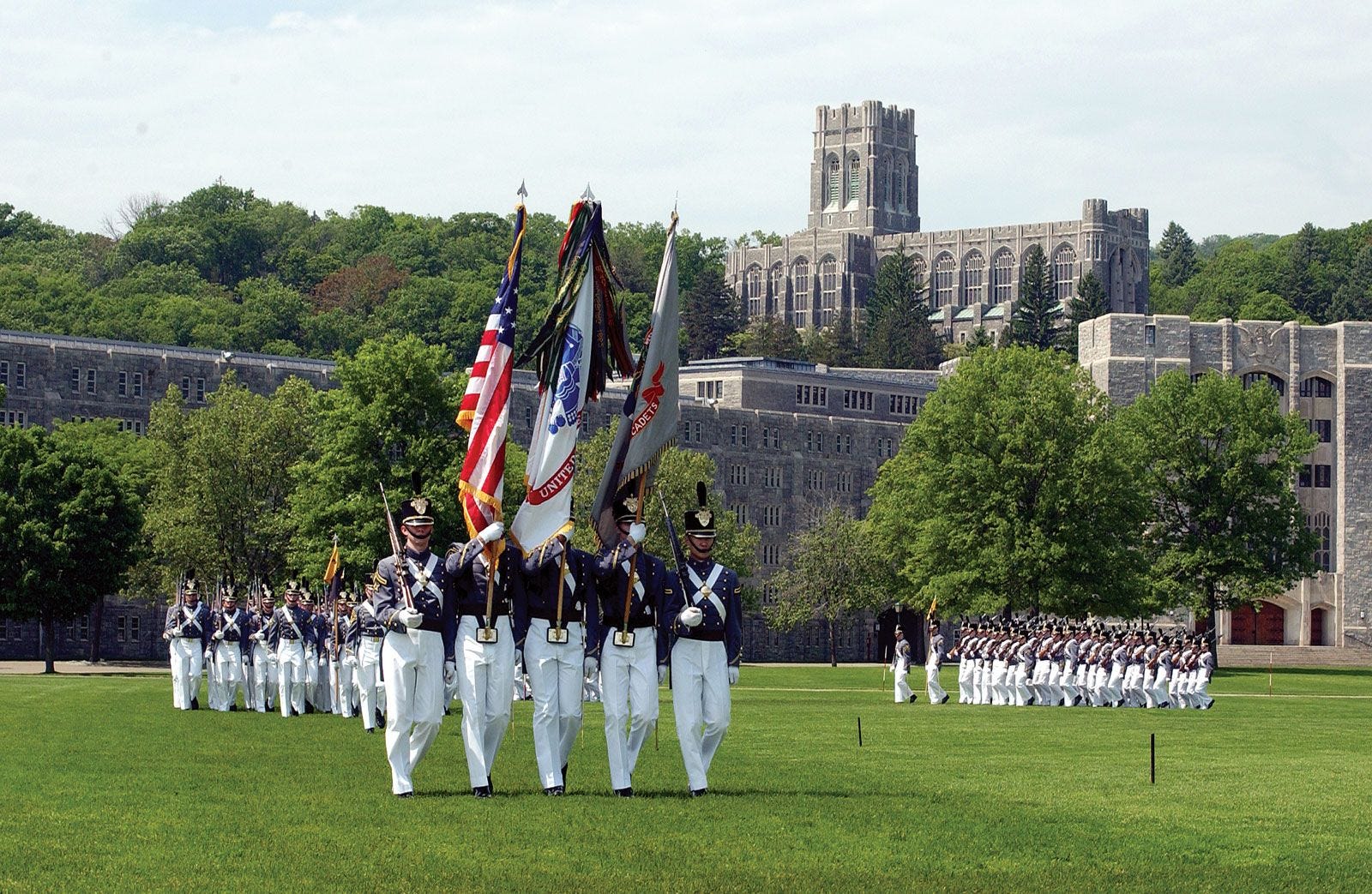
Luckily, the federal government already has proven its ability to build programs that do just this. Service academies and the ROTC have successfully provided free college and targeted skills training for generations. They operate on a simple principle: the government pays for your education and, in return, you provide military service for a certain number of years. This is incredibly effective. It is cost-efficient, as the government saves enough money in reduced wages to offset most of the costs of running the universities and paying out scholarships. They incentivize programs deemed helpful to military functions like cybersecurity, engineering, and criminal justice. It is also very popular. ROTC scholarships enroll about 20,000 students a year, and acceptance rates hover between 10 and 20%. The acceptance rates at the five service academies are all below 17%, which is especially impressive given that you need a nomination from a member of Congress to apply and then have to serve in the military. Clearly, the federal government has found a way to effectively provide high-quality education for free. Why not expand it?
The government has a similar program that has proven successful. The Public Service Loan Forgiveness program offers free education on the back end, after one leaves college. It is cost-effective and addresses some of the problems I have described. However, the program design is pretty terrible, with mountains of paperwork and unclear requirements that leave many applicants screwed. Redesigning the program as a scholarship instead of loan forgiveness would reduce many of the administrative barriers (students would already be applying to many colleges and scholarships, one more is not the worst thing in the world) and there is evidence that such a program is more appealing to students due to the absence of debt aversion.
A public service academy, combined with a similar scholarship program, operates on the same principle as a military service academy and the ROTC. The government pays for your college, with certain incentives and preferences for desired areas of study, and in return, you work for the government for a specified amount of time. This frees students from the deleterious incentives of the private sector, builds a culture of civic duty and public service, and fills gaps in the government’s bureaucracy that the free market has failed to. This gives the government both the control to incentivize education with the greatest public benefit and the flexibility to adapt to changes in the job market and education system in a relatively short time frame. These programs can target occupations where market wages systematically underprovide relative to social need. Public defenders, whose caseloads routinely exceed constitutional adequacy standards. Rural primary care physicians and psychiatrists, whose geographic maldistribution leaves entire counties without providers. K-12 teachers in STEM subjects and special education, where vacancy rates have reached crisis levels. Civil engineers for aging infrastructure. Federal cybersecurity analysts competing against private-sector salaries three times higher. The common thread: jobs where the beneficiaries of good performance, students, patients, the public cannot directly pay for it, creating a gap between private compensation and public value that only government intervention can close.