


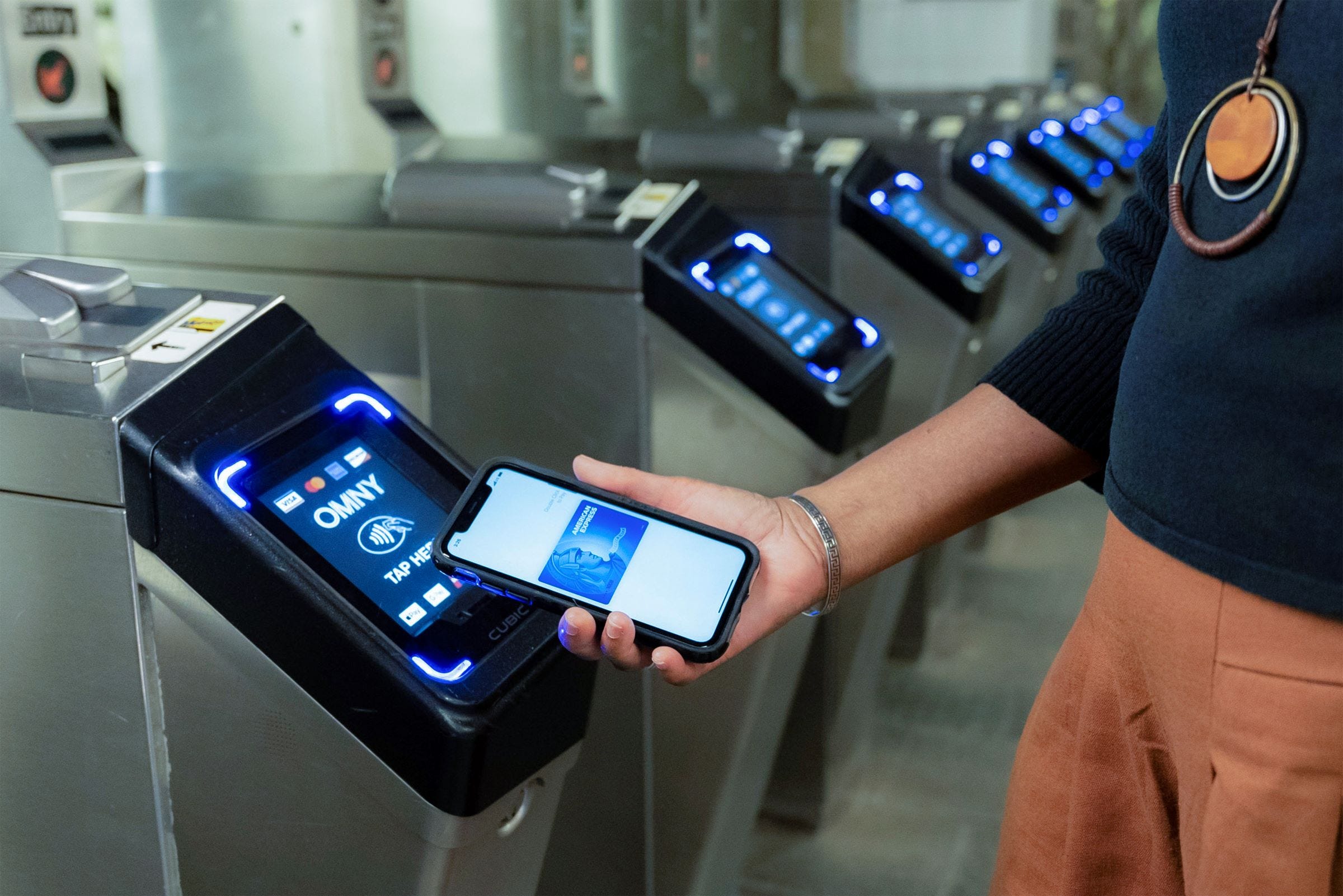
In theory, decision to transition from the MetroCard to OMNY was a great idea. The MetroCard was far behind other transit cards, which were more modernized and reliable. We should be taking advantage of new technology, like Apple Pay and NFC. OMNY promised an integration of all of New York City transit, a One Metro New York. You would not need a separate app for Metro-North or the LIRR. The most optimistic of us envisioned a world where OMNY would work on the PATH and perhaps even some NJ Transit bus lines. OMNY offered a real opportunity for technological upgrades and a more harmonious regional transit system. Instead, we got a rollout that was an unmitigated disaster. Below, I have compiled a short list of the many, many problems that have occurred during the rollout of OMNY:
Integration with Bee-Line Buses in Westchester only occurred after the Metrocard was phased out
Update that did not allow the purchasing or reloading of OMNY cards (for an entire weekend!!!)
Incompatibility with fare enforcement
Does not recognize cards that have reached their weekly fare cap
Does not recognize tap-to-pay devices (wasn’t this the whole point of OMNY)
It’s ugly.
And these are just the stories I found in one afternoon;I’m sure there are way more that I’ve missed. Fare collection should be the bread and butter of a transit agency, but they have managed to fuck up every step of the process. I was really looking forward to OMNY. I thought it would make my life so much easier, but it hasn’t. At all. OMNY works on fewer lines than the MetroCard did. It’s not even fully integrated with all the MTA’s services, let alone those run by other transit agencies. What was the point of this entire, long, expensive process? Who is responsible for this mess?
Cubic Transportation Services Incorporated. It’s Cubic.
Cubic is the owner and operator of everything OMNY-related. They are responsible for the software, the hardware, the customer support, the implementation, and everything else. They operate transit payment systems around the world, so they should be experts at implementing a new system, right?
Wait.
Cubic’s other ventures have faced similar problems?
That’s right. Cubic has been pulling these shenanigans for decades. I’ve compiled another short list of the many problems various transit agencies working with Cubic have run into.
Vancouver’s was delayed, faced extreme technological limitations in the first 15 years, and then refused to re-contract with Cubic
London developed their own system and software, then recontracted because it was dissatisfied with Cubic’s service
Boston’s system was delayed, and the costs overran, as Cubic faced accusations of focusing on the OMNY card at the expense of Boston’s Charlie Card, which cost 300 million dollars more than NYC’s
Chicago faced technical issues, an outage one day after rollout. The contract was led by the guy who sold Chicago’s parking meters to the UAE (This was one of the stupidest decisions a city has ever made. How Rahm Emanuel portrays himself as an effective technocrat is an unfathomable mystery). The rollout was so bad that a citizen decided to FOIA all documents related to the contract.
San Francisco also faced software problems with their Clipper Card
This is only a short list. So why do people keep hiring them? How are these guys still in business?1 I don’t have a complete answer. I am so shocked by the extent of Cubic’s ineptitude that I have difficulty understanding its continued existence. There are other, better companies that offer the same services. I’ve done my best to come up with a few plausible explanations:
Collapsing State Capacity
Most city governments lack the capacity to build their own fare collection systems. To do this from scratch would require a lot of talented employees dedicating significant time and energy to one, albeit large, task. Many transit agencies are hesitant to dedicate such manpower and funding to a single project. However, this tendency need not be the case. In fact, the same innovative software behind OMNY, which enables fare capping and debit and credit card integration, was designed for London’s Oyster Card by Transport for London. This software has since been contracted out to Cubic, which then sold it to New York and other cities. There is not enough appetite for state capacity to make this in-house work possible in the US, especially in our transportation systems. However, this problem is made worse by another failure.
Failure to Outsource Effectively
American cities are terrible at subcontracting. The usual process is a bidding system in which the contract goes to the lowest bidder. That is, unless there is one of a limited list of reasons the government can dismiss that bid. This system makes sense as a means of limiting corruption, but these safeguards also hinder the government’s ability to select the highest-quality contractors. This situation is made even worse when the number of bidders is extremely low. Zachary Liscow, a professor at Yale Law, argues that actively recruiting potential bidders yields immense benefits for the government. The fewer bidders there are, the higher the costs and the worse the quality. This phenomenon is almost certainly the case with Cubic. We luckily have information about at least one of the bidding processes that led to Cubic’s contract with a major U.S. city. In Chicago, one advocate was so frustrated by the Ventra card that he FOIA-ed all documents from the bidding process. In the end, only two companies competed for the Ventra contract: Cubic and Samsung. Samsung’s bid was over one billion dollars higher than Cubic’s – Chicago had essentially no choice but Cubic, no matter how poor the quality of its past work. This is pitiful, and, in order to improve their services, transit agencies must commit to one of two options: 1) do a better job of searching and recruiting high-quality contractors, or 2) build in-house proficiency that allows them to avoid this whole bidding rigmarole.
Lack of Curiosity and Expectations
This leads to the final problem that works in Cubic’s favor. American transit agencies have demonstrated no desire to do the hard work of finding better subcontractors. They see the exorbitant rates charged by these transit subcontractors as innate and immutable; thus, they see no point in looking for alternatives. When they do decide to look elsewhere, they do not look far enough. Instead of drawing inspiration from high-quality transit systems around the world, such as those of China and Japan (or even Germany2 and Spain), they focus on other American transit agencies. They might even deign to look at another Anglophone country’s transit, such as England’s or Canada’s. As a consequence, instead of realizing that Cubic sucks at its job and that better alternatives exist, they remain satisfied with our broken, slow, expensive smart cards.
This same problem exists across American transit operations. Again and again, U.S. transit agencies argue that they are special, special boys that they must have obscene amounts of money to spend on building rail, operating buses and trains, or doing anything else that might improve transit users’ lives (at much higher rates than other countries). As a result, compared to non-Anglophone countries, we build fewer lines that run more slowly and are less accessible. We have become incurious, refusing to look beyond a narrow, Anglocentric view of transit operations that is falling further and further behind.
There is a world beyond Cubic Transportation Systems Incorporated. I only ask that our transit agencies look for it.
Please.

Other than the other half of their business, which is a defense contractor.
Germany in particular is an important example to look at. Their method of fare collection, which has no fare gates, is entirely different from our own, and much more efficient. This video offers a good explainer for someone who’s never been to Germany. Janno Lieber has been promising that the MTA will do this for years, but it’s impossible without a competent fare collector

I support this