

Who's Your Daddy?
Small steps towards a post-nuclear family egalitarian order.

I’m thinking about love, sex, marriage, and children. I spent the weekend with my partner. I saw the engagement photos of a right winger I knew in high school. A pride flag was torn down from Stonewall Monument. Birth rates in industrialized countries around the world are collapsing. South Korea is already doomed. Perhaps the U.S. is next. Cohorts of men and women with homesteading fantasies believe that feminism is to blame for our relationship problems. They are mistaken.
Ceding ground to anti-feminism comes at the cost of human dignity for large swaths of the population. Personally, I do not want to live in a world where women are abused and children are fed to machines. In a larger series on feminism, Darby Saxbe has argued this point. She lays out that American culture has found itself in a compromise position between reactionary and progressive forces where only some feminism is present. This middle-ground feminism has led to lower marriage rates and lower birthrates; but she also finds that the best path forward for thriving individuals, happy marriage, and higher birthrates is to demand more feminism, not less. In her estimation, a strong welfare state alongside the traditional structures of marriage can sufficiently incentivize Americans to pair off and make babies. It’s true that children fare better when their families are stable. I broadly agree with her arguments. Still, we must endeavor to imagine what a world of “more feminism” might mean for the current and future organization of family structures.
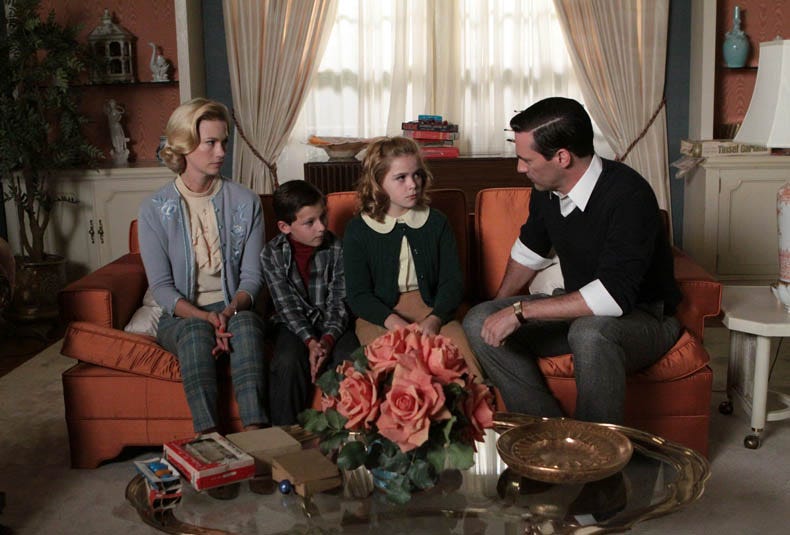
Nuclear marriage as the primary organizing principle for child rearing is the legal hangover of an inegalitarian property regime. The history behind that statement is unambiguous, and many of my enemies yearn for such a marriage. But modern marriage is not identical to its history, and over time, it has evolved into a more egalitarian relationship. Technological development in birth control, Supreme Court decisions like Lawrence v. Texas, and divorce reform throughout the states decentered sexual relationships for children as the basis for marriage. Domestic abuse and suicide rates fell for women. People began to marry later in life, and partners began to carry more equal financial burdens. These changes paved the way for Obergefell v. Hodges, which recontextualized legal marriage as predicated on relations of care rather than sex. Essentially, the law took a turn that better reflected evolving social norms around what marriage meant to the people who participated in it. Then progress stalled.
Part of the stall came from a myopic focus on traditional marriage as the organizing framework around raising a family. As a society we have not sufficiently accounted for the obstacles that changing family models face within this framework. More couples are raising children where at least one of the parents is not biologically related to the child. This change includes families with queer or polyamorous parents, though it is not limited to them. More often, non-traditional family structures include single, remarried, or cohabiting parents.
Legal scholars like June Carbone and Naomi Cahn have pointed out that the law has not developed to reflect these different arrangements. Instead, current parent systems assume a one-size fits all approach built off the model of dual-income marriages. That usually means child support in exchange for visitation rights. For low- and middle-income custodial parents, child support measures within these systems can be punitive and distant from the transactional agreements families reach among themselves . And children within these families may have relationships with more than two parental figures, which can lead to problems within a dual parent framework. For instance, if a child sees their biological father twice a month and otherwise lives full-time with their mother and a man who performs a fatherly function, where does the parenthood of the child lie?
With the concepts of partnership and parenthood increasingly decoupled from marriage, biology, and sex, some state parenthood laws have begun to adopt expansive and gender-neutral framings. Namely, the 2017 Uniform Parentage Act aimed to remove expensive court barriers to parenthood, extend parental recognition to de facto caregivers, and create gender-neutral language for voluntary acknowledgments of parenthood related to assisted reproduction provisions. These reforms indicate that instead of sex, parenthood can find its roots in the intentions, functions, and family formations of different parties. Importantly, these roots do not negate the significance of marital and biological relationships between parents and children. They only extend the possibility of parenthood to those outside of the institution’s traditional castings.
Progress is not without its detractors. Those who care for relationship equality are seemingly on the back foot. On the micro level, conservative critics argue that provisions related to voluntary acknowledgement of parentage, like those found in the UPA, effectively allow strangers to sidestep legal adoption processes, endangering the children those processes are meant to protect. Putting aside the discriminatory practices of adoption and foster care agencies that help make these reforms necessary, currently proposed legal frameworks for intentional parentage are limited to parents of children conceived through assisted reproduction. In most cases, these parents are already a long-term partner of the child’s biological parent. The law is merely addressing a gap. On the other hand, certain provisions around surrogacy in the UPA are criticized as commoditizing children or creating risks for exploitation. While I am sympathetic to these concerns, I do not believe the proper response to them is barring would-be parents who cannot otherwise have children from the possibility of parenthood. The fundamental issue is rooted in the coercive force of economic insecurity, which is better addressed through economic plenty and a redistributive welfare state.
We should begin to imagine this redistributive state as an alternative to the current child support regime. In the first place, it does not make sense to require an unmarried biological father without a job to pay for child support he can not afford so that he can have legal parenthood over a child he cares for. Such a practice, which is commonplace today, harms all parties involved and minimizes the agreements that private parties come to regarding their families. That’s a recipe for resentment and turmoil for parents and children alike. Instead, family support should be guaranteed on a larger social scale through child allowances, universal childcare, and the provision of people’s other basic needs.
If we stay on the course and enable both egalitarian relationships and robust welfare regimes, there really is little reason to legally limit parenthood to a pairing. The whole world can be your family; the whole world can offer support. But a media fascination with polyamory, which John Roberts perceived as the logical next step of a more liberatory marriage framework, has minimized our concept of how such a framework extends benefits to monogamous birth parents with nontraditional families. Parenthood recognized through intent, function, or formation can likewise empower queer couples who pursue assisted reproduction, grandparents, stepparents, and other nontraditional caregivers who provide for a child. Simultaneously, the formalization and protection of the social bonds children form with adults can help contribute to stability for the child. In the process, we can begin to form the basis of a communitarian family model that strips off the unequal trappings of the nuclear family.

 | A guest post by
|