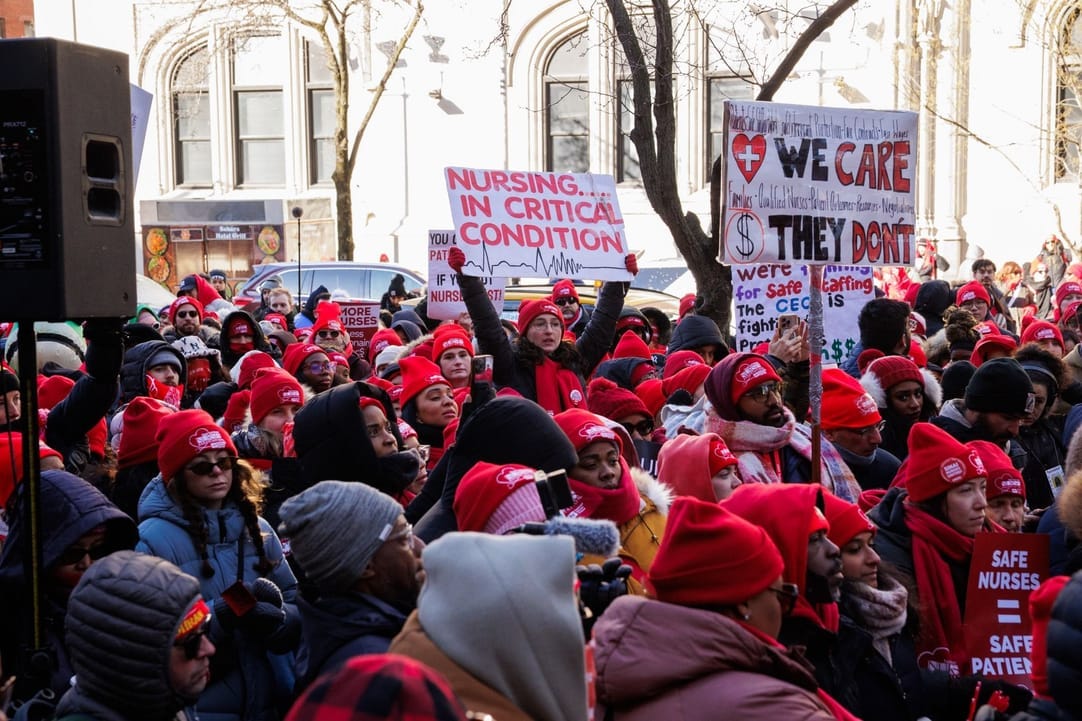
The strike of New York City nurses rolls on. The New York State Nurses Association is demanding safe staffing levels, protection from violence at work, and improved healthcare benefits. The demand for protection from workplace violence is central, with the strike being ushered in by an incident in January where a man armed with a broken piece of toilet seat barricaded himself in a room with a patent and security card. Following the event, Mount Sinai hospital management had the audacity to write up several employees and suspend one for voicing their concerns about hospital safety in public. As the nurses voiced their relatively moderate demands, the CEO of New York Presbyterian raked in a $26.3 million salary in 2024, with the Montefiore CEO receiving $16.7 million.
Though ~10,500 nurses at Mount Sinai and Montefiore ratified three-year contracts, 4,200 NYP nurses remain on strike after overwhelmingly rejecting a mediator’s proposal. The core dispute at NYP is the staffing ratio, with the hospital offering half the number of new hires demanded.
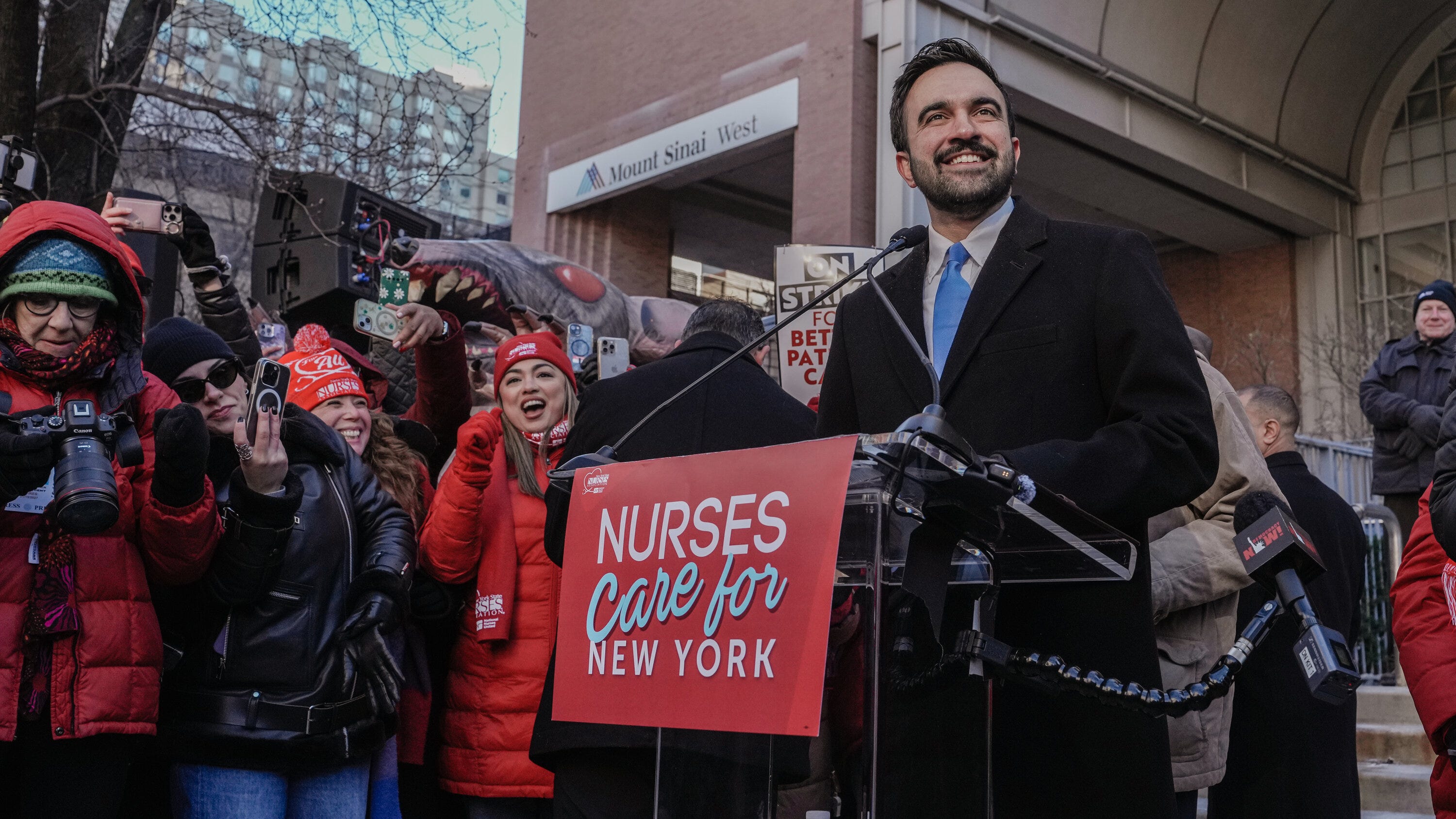
While Mayor Mamdani has supported the strike and attended the picket, Governor Kathy Hochul has issued an executive order allowing nurses registered in other states to practice in New York State. This strike-breaking measure, designed to decrease the bargaining power of the nurses, has been intensely derided by the union. The rapid influx of out of state temporary staff has made winning the strike extraordinarily difficult.
What this demonstrates is that parochial occupational licensing regimes are no real protection for labor when the time for strike action emerges. By relying on the regulatory state to preserve New York nurses from competition, the union has privileged their sectional interest over that of patients and out of state nurses, all without actually increasing their bargaining power due to the contingent nature of such protections.
New York remains one of only seven states not participating in the Nurse Licensure Compact, which allows nurses registered in any participating state to practice in other states. New York imposes distinctive requirements that creative frictions for out-of-state nurses, including coursework in infection control and child abuse identification and reporting, adding weeks to the endorsement process when combined with education verification requirement sand application processions. Nurses report wait times of over 80 days in many cases. New York’s licensing structure is valid for life, with registration requiring renewal every three years. Though it is trivially true that there are “415,000 licensed registered nurses in New York …, but just 63% of them are active and working in the state”, that count is inflated by lifetime licensing. There are thousands of out of state nurses willing to serve in New York City, who are prevented from doing so by the restrictive licensing regime.
NYSNA has placed higher staffing counts in their central demands, which is entirely in accordance with both patient care and protecting the well-being of the staff. However, with one of the most restrictive licensing regimes in the country, it is difficult for hospitals to hire additional nurses at scale even if the strike successfully forces them to do so. The fact that the licensing structure actively militates against a core demand of the strike should bring its very existence sharply into question. Regardless, NYSNA has successfully blocked bills to enter the compact in every legislative session since 2010. Their arguments focus on the licensing fee revenue that funds nursing education programs, but this could be easily replaced by general fund tax revenue.
Further regulatory changes could even increase nurses wages and bargaining power while also providing significant benefits to patients. Expanding scope-of-practice for nurses would allow nurses to complete more tasks reserved for doctors. Economic evidence has found that expanded authority increased routine checkups, improved care quality measures, decreased emergency department visits, increased patient satisfaction by 20%, had no increases in patient harm, and increased nurses wages. If nurses are more valuable to the hospitals because they are allowed to practice a wider field of tasks, organized nurses gain more leverage to demand increasing pay and protection. While New York State made strides towards such a reform by lifting scope-of-practice regulation for nurses with 3,600 or more hours of clinical experience, this could be significantly lowered - ideally to 0.
Of course, such reforms would not solve the core problem resulting in hospital understaffing: corporate unwillingness to provide sufficient workplace restrictions and compensation has caused many licensed nurses to quit seeking employment in patient care. The hospital industry has achieved extraordinary regulatory capture, using certificate of need laws to make it more difficult to open a new hospital and lobbying the FTC to allow a set of rapid mergers in the 1990s that have allowed hospitals to leverage significant market power, raising prices 20%-40% higher than a competitive baseline. Breaking the hospital industry cartel would also expand labor’s influence, as would nationalizing the hospitals a la the NHS.
I wish the nurses victory in their strike. Our horizons must be larger than protectionist regimes that harm the public for ephemeral benefits easily revoked by the state. If we are to have a national system of nurse licensing, a national system of sectoral bargaining would permit labor to negotiate and strike on that national basis, granting them the leverage of an entire sector united in one struggle. More nurses, with higher wages, not less nurses, abandoned by Albany in the cold.