


A child with malaria begins with fever and chills. Within hours, the parasites multiply in her bloodstream, destroying red blood cells faster than her body can replace them. Her skin turns pallid, then gray. Her breathing becomes deep and labored as her blood acidifies. Seizures. She stops responding to her mother’s voice. In cerebral malaria, the parasitized cells clog the blood vessels in her brain. Without treatment, she will likely be dead within two days of the first break of fever.
600,000 children die of malaria each year. The richest country in the world should eradicate it.
The Trump administration’s evisceration of USAID, the funding freezes that have shuttered clinics, collapsed drug supply chains, and thrown health workers into unemployment, will kill. The President’s Malaria Initiative, which distributes tens of millions of insecticide-treated nets annually across twenty-seven countries, has been crippled. PEPFAR, which keeps twenty million people alive on antiretroviral therapy, teeters on the edge of collapse. These are not abstractions. They are death sentences.
But let us be clear: the status quo ante was already a policy of mass death through indifference. The cuts are a directional intensification, not a departure. Before the Trump administration took a razor to global health funding, the United States was already permitting hundreds of thousands of children to die of diseases we know how to prevent and treat. The annual funding gap for malaria control alone, the difference between what is spent and what is needed to meet even modest targets, runs to billions of dollars. Aid flows have long followed the logic of empire rather than the geography of disease; money goes where strategic interests dictate, not where children are dying. The question before us is not merely whether to restore what was cut, but whether to finally do what has always been possible.
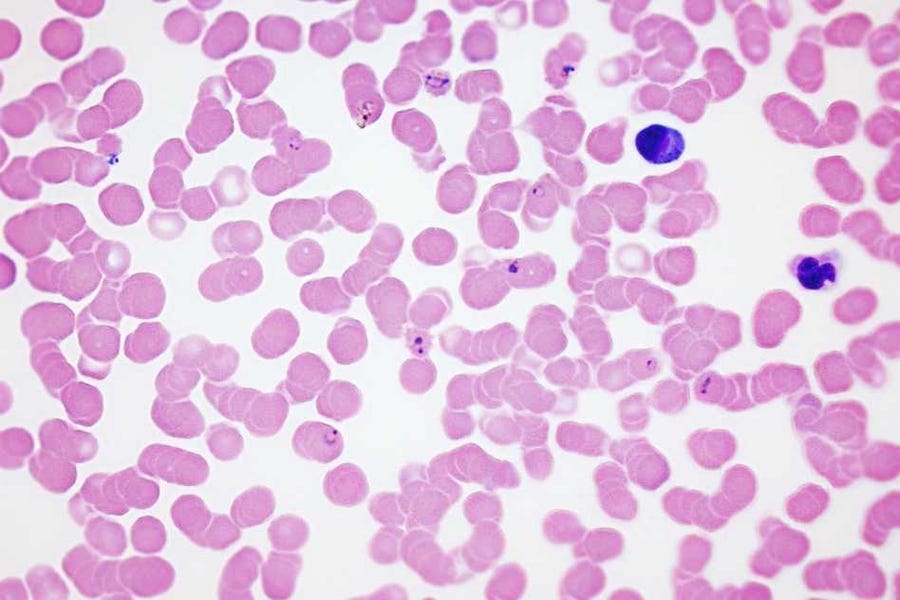
Consider malaria. In 2022, the disease killed over six hundred thousand people, ninety-five percent of them in sub-Saharan Africa, nearly four-fifths of them children under five. These are not deaths from some inscrutable plague for which medicine has no answer. We possess an arsenal of interventions of proven efficacy: insecticide-treated bed nets, which cost two to three dollars each and last several years; seasonal malaria chemoprevention, a regimen of sulfadoxine-pyrimethamine and amodiaquine that reduces malaria episodes by seventy-five percent when administered monthly to children during the rainy season; artemisinin-based combination therapies, which cost a dollar or two per course; rapid diagnostic tests for fifty cents. The R21 vaccine, recommended by the World Health Organization in late 2023, demonstrates approximately seventy-five percent efficacy in trials and costs only a few dollars per dose. The Against Malaria Foundation, one of the most rigorously evaluated charities in the world, estimates that it saves a life for roughly five thousand dollars. These are solved problems. They persist not because we lack the means, but because we lack the will.
The global community spends approximately four billion dollars per year on malaria. The WHO estimates that meeting even the 2025 control targets would require over seven billion, a gap of several billion annually. Eradication, the permanent end of this ancient scourge, would cost more: the EndMalaria2040 initiative estimates ninety to one hundred twenty billion dollars over the eradication pathway. This is a considerable sum. It is also roughly equivalent to the net worth of a single man.
Bill Gates commands a fortune of approximately one hundred thirty billion dollars. His foundation disburses seven to eight billion annually across all its programs, perhaps a billion of that toward malaria. He could fund eradication with most of his wealth. He has not. Philanthropy will never substitute for political will and the financial capacity of the state. The decision over the lives of hundreds of thousands must not be left to oligarchs. It is a political question, with a political answer.
To grasp the scale of what is possible, compare these figures to what the United States spends without hesitation. The defense budget alone approaches nine hundred billion. A single Ford-class aircraft carrier costs thirteen billion dollars; the F-35 program will consume nearly two trillion over its lifetime. Closing the malaria funding gap would cost a fraction of a percent of the defense budget. Funding the eradication pathway over two decades would amount to five or six billion per year, less than we spend on a single weapons system.
And malaria is not the only solved problem. Diarrheal diseases kill half a million children annually; oral rehydration salts cost fifty cents per treatment. Childhood pneumonia kills seven hundred thousand; amoxicillin costs less than a dollar per course. Vitamin A supplementation, at one to two dollars per child per year, reduces all-cause child mortality by nearly a quarter. Measles vaccination costs a dollar or two per dose. The Disease Control Priorities project estimates that an essential package of health interventions for low-income countries would cost forty to eighty dollars per capita per year. For tens of billions annually, a rounding error in the federal budget, the United States could prevent millions of deaths.
More radically, extreme poverty itself is tractable. Approximately seven hundred million people live below the World Bank’s poverty line of $2.15 per day. Rigorous randomized trials of unconditional cash transfers, conducted by GiveDirectly, demonstrate significant, sustained improvements in consumption, assets, and well-being. The mechanical cost to close the global poverty gap runs to one or two hundred billion dollars per year. There are complications: questions of absorptive capacity, inflation, sustainability, but the evidence is clear that cash transfers help poor people, and we know how to deliver it. This is not utopianism, but logistics.
The Trump administration’s cuts represent the logic of nationalist retrenchment taken to its brutal conclusion: the lives of foreigners do not matter. But the liberal alternative, incrementalism, celebration of marginal improvements, deference to philanthro-capitalism, has also failed.
Eradicating Malaria would be a glorious act of internationalism, a noble war against a sickness that has taken untold human lives, mostly those of the poor and exploited. Should the left take power in this country and fail to meet such a standard, it will have committed a moral travesty. As progressives are wont to point out, the richest country in the world should not contain people without health insurance, and therefore it should not shy from the opportunity to rid the world of Malaria. Before 2025, the Democratic Socialists of America had “abolish USAID” as a plank in our national political platform. For decades, the left has derided USAID as ‘imperialist’, alleging it was simply a vector of American power, a tool for political influence. While there is some evidence of this activity, the overwhelming majority of USAID’s work was that of lifting people out of poverty and treating disease. Regardless of its weak factual basis, the anti-imperialist critique is a hollow response to the deprivations of the developing world. Without a positive alternative, we have ceded this morally urgent terrain to philanthropists. Solidarity does not simply consist of ending imperialist aggression abroad, but replacing it with cosmopolitan deliverance. You can assist in this effort now by donating to the Against Malaria Foundation or Helen Keller International, and help later when it is time to advocate for the next Congress to guarantee the trivial funding necessary to save millions of lives.


GIveDIrectly mentioned!