

The NY ChatBot Bill is Everything Wrong with the Left
Socialisme ou stupidité

This week, a tweet from More Perfect Union made the wider AI policy community and New York City socialist movement aware of S7263, Socialist-in-Office Kristen Gonzalez’s chatbot use bill that would prohibit AI models from being used to provide responses covered by a list of licensed professions in New York State, including medicine, dentistry, pharmacy, social work, and psychology.
I am a member of the New York City Democratic Socialists of America, this country’s most vibrant left-wing organization, the mass political movement that lifted a pragmatic social-democrat into the mayoralty and is busy decimating the Democratic political machines that have held back the dynamism of the greatest city in the world for decades. We have on our side elected representatives pursuing legislation to ensure that our government acts with ambition and drive, free from the constraints of bureaucratic proceduralism. The DSA’s House the Future campaign is pushing for legislation that establishes a state social housing authority that would have complete preemption from local zoning, and it is because of Zohran Mamdani that New York is moving towards reform of its sclerotic system of environmental review.
There are unfortunately some pretty serious, and incredibly stupid blind spots.
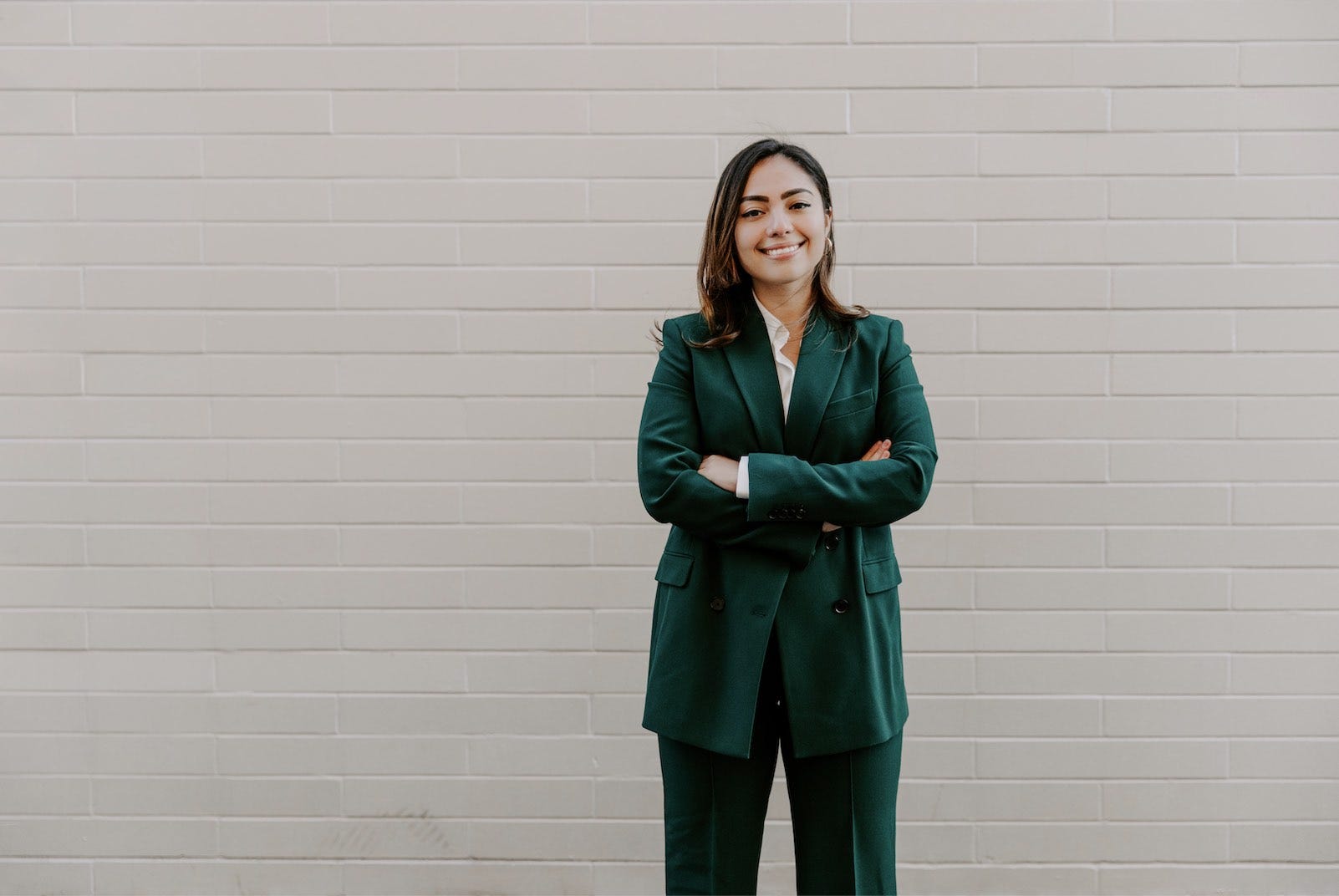
I have been aware of Gonzalez’s bill for some time, as it was introduced on April 7th, 2025, but it has now been placed on the Senate floor, meaning a full chamber vote is imminent. Before sponsoring this bill, Gonzalez, a former tech worker, proposed S9381, a general chatbot liability bill covering misleading and harmful information and requiring disclosure that users are interacting with AI. This bill was far less dangerous, but it unfortunately died in committee. This bill goes far beyond liability for misinformation, and now includes the following language to amend the General Business Law:
A proprietor of a chatbot shall not permit such chatbot to provide any substantive response, information, or advice, or take any action which, if taken by a natural person, would constitute a crime under section sixty-five hundred twelve or sixty-five hundred thirteen of the education law
This covers the following professions: medicine, dentistry & dental hygiene, veterinary medicine and animal health technology, physical therapy and physical therapist assistants, pharmacy, nursing, podiatry, optometry, engineering, land surveying & geology, architecture, psychology, social work, mental health counseling, marriage and family therapy, creative arts therapy, psychoanalysis, and separately, Attorney practice. Notably, here engineering refers to licensed professional engineering work, including structural calculations, site assessments, or safety-critical design decisions, and proprietor refers to whoever “owns, operates or deploys a chatbot system used to interact with users”, applying to any organization that decides to use a model in its operations, including non-profits, legal aid groups, or even government agencies.
The bill’s structure utilizes the logic of existing unauthorized practice law rather than creating a new regulatory category, the move being to cross-reference criminal statutes (Ed. Law §§6512–6513, Judiciary Law Article 15) rather than define the prohibited conduct independently. The proprietor of the chatbot is liable if the output would constitute a crime if produced by a human, and goes even further by omitting disclaimers shifting reliance risk to the user, generating a strict liability standard on the output’s content.
Unlike the earlier S9381, which allowed proprietors to escape liability by correcting information and curing harm within a 30 day period, S7263 has no remediation window. Its enforcement mechanisms are a private right of action with fee-shifting on willful violations, meaning that the defendant pays plaintiff’s attorneys’ fees and costs. This makes low-value cases worth filing and will inundate any organization deploying a large language model for the listed fields, or even adjacent ones, with suits.
The lack of a definition of a “substantive response” provides no guide to action and will create a chilling effect on AI use in general, which is likely the intention. However, we can draw out some use-cases that would likely be prohibited:
A legal aid nonprofit using AI to help tenants facing eviction understand their rights, by deploying a chatbot that helps low-income tenants identify whether their landlord’s behavior violates housing code, explains the timeline of an eviction proceeding, or helps them draft a response to a notice. Under S7263, this would constitute unauthorized practice of law under Judiciary Law Article 15. The nonprofit itself would be liable as the proprietor, with no disclaimer defense available and no cure period. The people harmed are tenants who can’t afford an attorney. As One Thousand Means has written before, AI could present solutions to access to justice problems that prevent the working class people the DSA was founded to fight for from navigating the legal system.
A rural pharmacy or community health center using AI to flag dangerous drug interactions. A patient in a medically underserved area submits their medication list and an AI tool flags that combining two of their prescriptions poses a serious interaction risk, advising them to consult their doctor. This is a substantive response in the domain of pharmacy and medicine. The bill would expose the health center to strict liability and plaintiff-side fee-shifting lawsuits for deploying the tool, even though the alternative is that the interaction goes unnoticed entirely.
A free mental health triage chatbot that helps people in crisis find appropriate care. A tool like this might ask someone about their symptoms, suggest that what they’re describing sounds like it could be a panic attack rather than a heart attack, and direct them to an appropriate provider or crisis line. This falls squarely within psychology, social work, and mental health counseling.
If any supporters of the bill would like to contest the idea that all of the above examples are obviously good, then feel free to do so.
This bill would make New York the most restrictive AI environment in the world, driving out startups building AI-assisted tools in covered fields and reducing New York’s leverage to actually regulate with an intelligently-designed framework.
A couple other notable problems include:
The open-source question seems unresolvable. If someone self-hosts Mistral and uses it to get legal information, who is the proprietor? This especially harms organizations more likely to deploy open-source models: non-profits and academic institutions.
If it passes, AI companies will weaponize it politically to militate against any and all regulation.
The NYC-DSA Tech Action Working Group has been catastrophically absent from the central questions of transformative AI: existential risk and capital ownership. Strangely, I am sympathetic to their ‘Principles on Technology’:
Technology must belong to and serve the people. This means building technologies that directly improve the material conditions of society, decrease human suffering, uphold human dignity and strengthen the solidarities that exist among us.
So true! You will notice that this bill does not guarantee the improvement of material conditions and in fact just bans a series of use-cases!
What causes a DSA working group to help craft a bill so obviously counter to the material interests of working people? What causes a DSA elected to support it?
Quite clearly, this is raw rent seeking by the credentialed professionals that compose the base of the DSA in New York City, a class that I am proud to belong to. The careful reader may note that this bill does not cover all licensed professions in New York State, excluding landscape architecture, public accountancy, and professional midwifery. Are these professions not deserving of protection under this framework? Or are there simply not many midwives in our mass socialist organization? This bill recruits AI policy as an enforcement arm of existing professional licensing cartels that restrict supply and inflate prices. The working class pays here, while the therapists collect $300/hour.
Rent-seeking, parochial licensing protections do not protect workers when open confrontation with capital emerges. In a slide discussing Gonzalez’s NY AI Act, a separate piece of safety legislation, the considerations by the working group include “what other AI use cases should be prohibited?” Instead of engaging with a broader social struggle for collective steering of our economy, this bill represents a left that has retreated into the defensive and economically destructive posture of conservatism, of a back-against-the-wall fear of any and all change. The logic that undergirds this bill would justify preventing the automation of any and all work, freezing the world in amber.
What is continually strange to me is the same individuals supporting this bill are also skeptical of existential risk. Gonzalez was, according to several people involved, the hardest Democratic vote to secure for Alex Bores’s RAISE Act, which the NYC-DSA Tech Action Working Group noted at the time had ‘effective altruist connections’.
While Bernie Sanders visits Constellation Research Center and meets with Eliezer Yudkowsky and Daniel Kokotajlo to discuss existential risk, much of the left retreats from the technology entirely. This profoundly unserious approach ignores the real risks presented by the growth of AI capabilities: to human welfare and human life, and discards them in favor of parochial rent seeking and generic opposition to growth and new technologies developed after 2012.
There is an alternative. We could have a truly progressive left that recognizes that the automation of human labor for the benefit of all is one of our central objectives, while working towards building the scientific and state capacity to foreclose existential risk and ensure a flourishing future.
At last, human hands, free from the plow!
Please call your state assembly members and state senators to oppose this bill, especially if you are members of the Democratic Socialists of America and are represented by a Socialist-in-Office..
 | A guest post by
|
It’s so cool and awesome that our descent into corporate feudalism comes with the re-emergence of guilds.