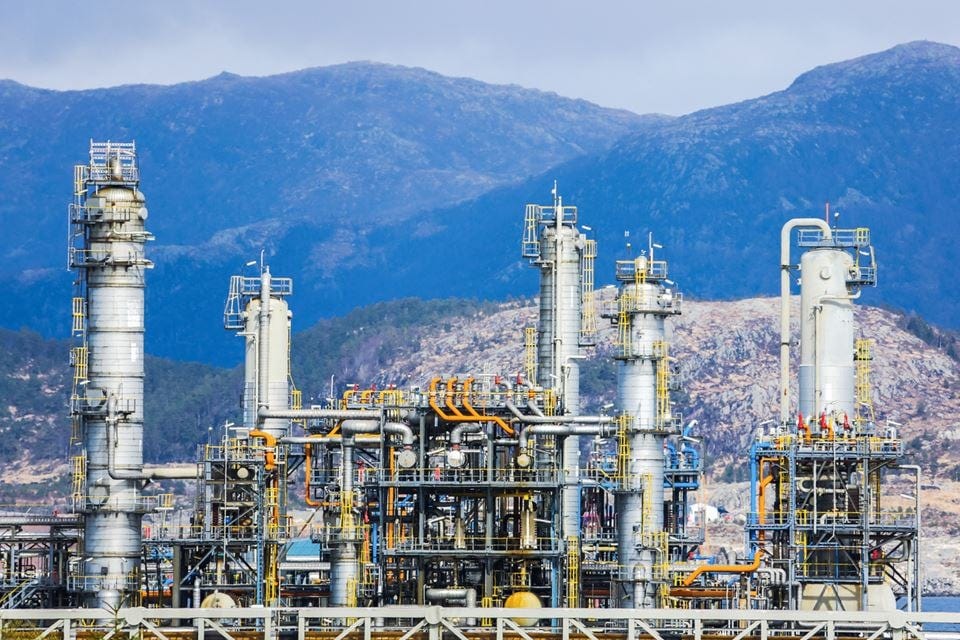
Environmentalists should like carbon capture and storage. It is a relatively safe, scientifically sound means of reducing the emissions from non-renewable energy sources. The way it works is pretty intuitive; a solvent, usually amine-based, will “filter” CO2 emissions from a natural gas plant’s industrial exhaust. The CO2 is then compressed and transported, usually via pipeline, to long-term storage. This obviously does not turn fossil fuels into a renewable resource, but it does make them cleaner; the implementation of carbon capture technology can result in the prevention of 95% of CO2 emissions on a facility level. Thanks to CCS, we can make substantial progress on emissions reduction without enacting austerity. This is an incredibly positive development, which is why it should not have surprised me that many environmentalists oppose it.
From the geniuses that gave us the anti-nuclear movement, we now have green austerity’s next big thing: carbon capture skepticism, because of course, there’s no point in reducing emissions if we don’t have to suffer for it. Organizations like Greenpeace have come out swinging against this technology, the former regarding it as a “deception netting [fossil fuel companies] billions of dollars and euros in public money.” This objection only holds any water if the underlying technology doesn’t work; if it does, this is basically objecting to a strong financial incentive to reduce emissions. Unless you are an insurrectionary anarchist, it makes no sense to oppose carbon-capture simply on the grounds that it benefits the financial health of an industry in conjunction with substantial emissions reduction. Therefore, the environmentalists have descended from their tower and deigned to engage with the actual science behind CCS, attempting to argue that the technology miraculously enriches the fossil fuel industry without working at all.
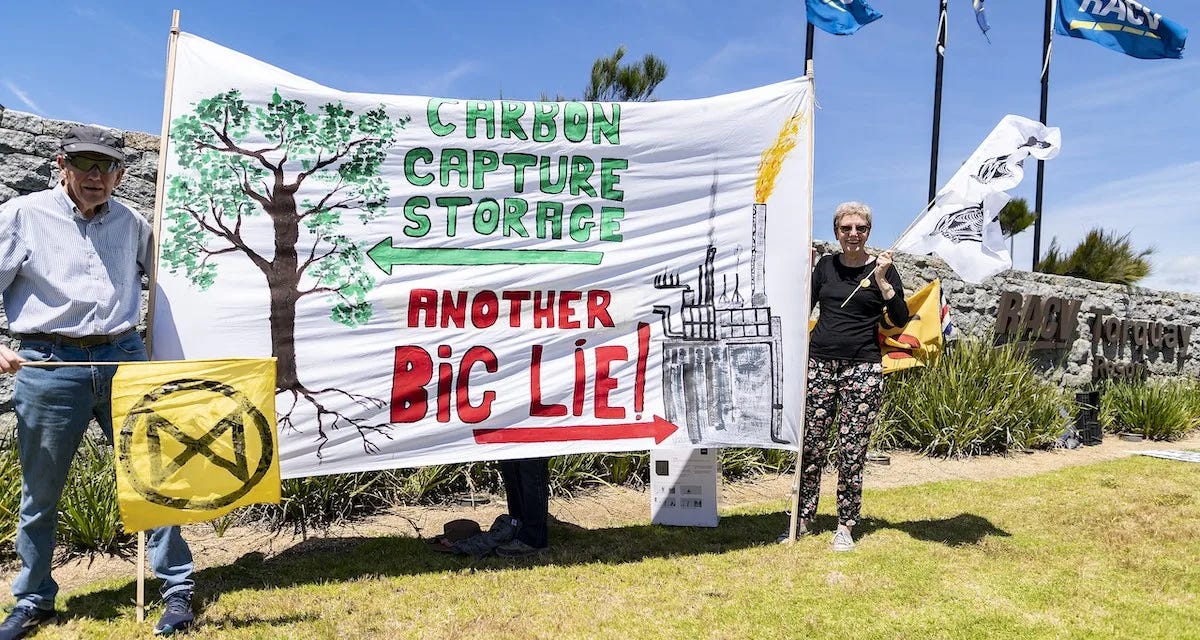
The problem they face in positing this is a tricky one: it’s not true. CCS has already had a positive effect on emissions at a limited scale, and has enormous potential to make an even greater impact. In spite of the common canard that solutions like carbon capture are merely theoretical, designed to allow gas companies to continue as usual, CCS is already being implemented and further improved upon. Existing carbon-capture projects are set to increase our carbon dioxide storage capacity nearly tenfold over the next 5 years. Its areas of effect extend far beyond the fossil fuel industry as well; carbon capture has enabled the production of low-carbon fertilizers, which will result in the storage of 800,000 tons of CO2 annually from just a single plant.The generalization of such practices is crucial to emissions reduction. If CCS makes fossil fuel extraction and use less environmentally harmful, that is clearly a reason to embrace its adoption, not reject it as insufficiently green.
Adopting this technology has not come without challenges. As of 2020, roughly 80% of U.S. commercialized CCS projects ended in failure, a figure that Greenpeace is all too eager to cite. This is par for the course; when a new technology struggles, the Ludditic impulse of its detractors causes them to decide, without evidence, that this clearly suggests that the technology is always and forevermore impossible to implement. However, if they actually bothered to read the paper they were citing, they would know that the researchers involved identified several specific and observable attributes of failed projects and made several recommendations to prevent said failures. Notably, Abdulla et al. still maintain the necessity of CCS despite recognizing historical failures. Greenpeace’s notion that these challenges reflect some sort of intentional scam by oil companies, rather than the predictable growing pains of technological development, exemplifies the conspiratorial thinking common among large swaths of climate activists.
Sure enough, since the publishing of this paper, new carbon capture research has seen notable breakthroughs, with novel projects enjoying considerable success. Last year, Norway’s Northern Lights project, the first large-scale CO2 capture, transport, and storage project, was completed and booked to capacity, with plans to increase storage threefold already underway. In the US, the Tallgrass Trailblazer pipeline started operation. Notably, this project avoided the kind of localist opposition that has led to previous failures, suggesting that energy companies are learning from prior mistakes. Advancements in the technology underlie this recent success. Researchers at the University of Houston engineered a membraneless CCS system, resulting in the reliable capture of 90% of emissions and a much lower energy requirement for amine regeneration. Most notably, 2025’s Nobel Prize in Chemistry was awarded to three researchers for their work on metal-organic frameworks, a prominent subfield of structural chemistry critical to the efficient and safe storage of gases.
The fact that these innovations have been necessary speaks to the kernel of truth in its most common critiques: there is room for improvement. However, when there’s room for improvement, the proper response is to improve, not give up completely. The surge in demand for energy is showing no signs of stopping, and innovations like CCS that allow us to reduce emissions while still meeting this demand are the opposite of irresponsible. Hopefully, organizations like Greenpeace will update their priors in response to carbon capture’s recent breakthroughs. Hopefully, they’ll recognize the strides being taken in meeting their concerns. Hopefully, they’ll come to see that innovation is not their enemy.