

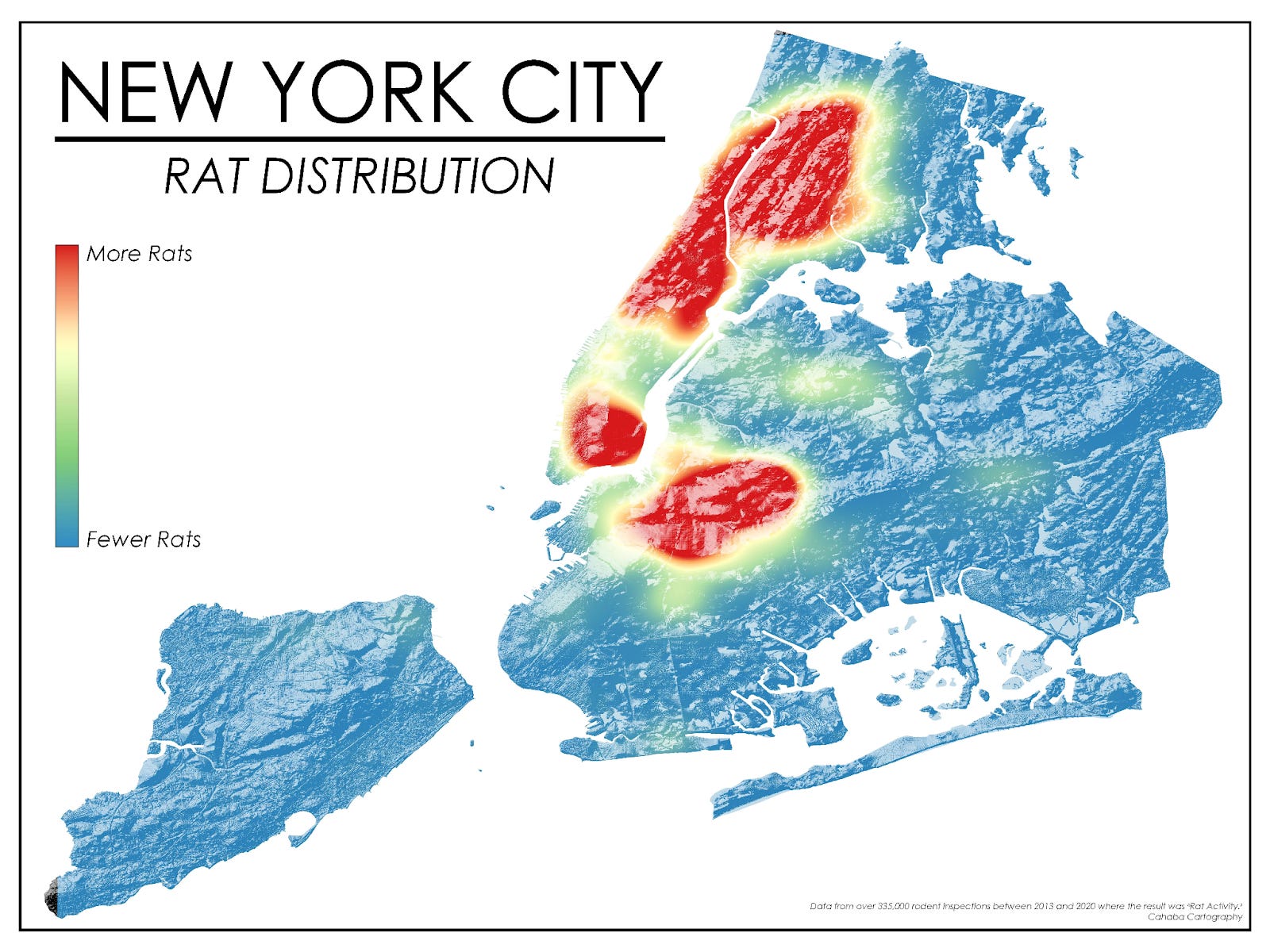
New York is famous for its filth. And while I love New York, I am not a fan of the filth. In the winter there’s piss-stained slush, in the summer it stinks, and year-round coiling rat piles form on blocks across the 5 boroughs. Every night I step outside my apartment door, rodents squeak beside me, taunting me, the city, and everyone in it. The trash bags these rats feast on are bad enough on their own; they impede sidewalks, ooze mystery juices, and send sharp rotting smells down the street.
The city is not blind to this problem. Workers at the NYC Department of Sanitation (DSNY) have stood on the frontline of an official rat war for years. In their fight, they have started to see some success. Specifically, trash containerization, which starves out our furry foe, has led to notable declines in rat reports to 311. Yet, despite the valiant efforts of New York’s Strongest, New York still ranks in the top 3 rattiest American cities, and rats continue to plague our homes and communities.
Putting trash in containers makes trash harder for rats to reach. Some city officials seem to only partially understand the concept behind trash containerization, so they paid McKinsey millions of dollars to explain it in a 2023 report. Although the outsourcing of public work to private entities is a threat to government excellence, that problem is not the issue we are focused on here. Since 2023, the city has containerized 70% of trash and made plans to tackle the remaining 30%. In 2025, after extensive review, the M9 community district became the first to accomplish total containerization through the rollout of Empire Bin dumpsters. The rollout got rid of most rats at the expense of some parking. Brooklyn Community District 2 will follow M9’s example in 2026. If putting trash in containers works in those districts, pending the completion of further environmental review, the city is expected to implement full containerization in 2032. Full containerization would come at the cost of approximately 150,000 street parking spots, or about 5% of the city’s total street parking. Since, like the majority of New Yorkers outside of Staten Island, I am a proud pedestrian, to me that trade seems more than worthwhile.
I want to give the DSNY credit for the work it has accomplished so far, but with our current approach, it will take nearly a decade for the city to actualize the idea that putting trash in containers makes the city cleaner. That timeline is embarrassing, and New Yorkers deserve better. For every year we delay the rollout of dumpster technology that Europe introduced to cities in the 70s, New York workers and residents will weather the environmental harms of festering trash and face exposure to labor-related injury and disease. Every year we delay cleaner streets, we uphold obstacles to public health, worker safety, and environmental justice.
In this case, the largest cause for delay is the city’s environmental review process, otherwise known as CEQR. On average, CEQR creates years of delay for public projects, including projects with clear and measurable environmental benefits. In accordance with its legal mandates, CEQR will subject further containerization rollouts to hundreds of pages of review and unknown hours of comment on issues ranging from cultural resources to shadows. But most of the environmental review for trash containerization will focus on the potential impact of dumpsters on parking. Roadway transportation makes up 22% of American greenhouse gas emissions. Our country has enough parking space to fill several of its states. And New York City’s primary environmental review concern is that dumpsters designed to address the public health harms of trash and rats will take up too much street parking. Years of implementation delay will follow, leaving rats scurrying in bags and between our feet as we walk.
CEQR and SEQRA, CEQR’s statewide counterpart, exists to provide data on what the environmental impacts of a project will be. Yet, environmental review often begins after public officials have already committed themselves to the pursuit of a policy, as is the case for trash containerization. This puts public officials and project partners in a bind. Environmental review was originally intended to increase accountability, but due to the uncertainty of additional costs imposed through procedural delay or litigation, public officials and policy leaders are less able to provide clear timelines and expense estimates, and sometimes disincentivized from pursuing projects at all. Meanwhile, delays and litigation brought through CEQR procedures burden clearly environmentally beneficial policy often with the intent to force state actors to abandon projects. Although these lawsuits are now usually dismissed in New York State, they can still cause years of delay as they make their way through the court system.
In practice, environmental review law has become an enemy of environmental justice. It has become a core obstacle in our pursuit of affordable housing and public infrastructure. It kills belief in our government’s capacity to deliver on promises just as it kills the climate it works so diligently to document. In the future, if we were to strive for improvements to trash containerization and collection methods to further New York City’s Zero Waste Plan, CEQR environmental review, in its current form, would stand in our way once again. Changes to the city that make streets more accessible for pedestrians, reduce car pollution, and provide health benefits for workers and children, should not be hamstrung by thoughtless proceduralism. Government geared towards actualizing public good should be the norm, not the exception. Thankfully, New York state is beginning to understand that good governance requires energetic governance. But for now, and until we fully reform CEQR, SEQRA, and their contemporaries nationwide, every rodent on the street will serve as a reminder of our self-imposed limitations.
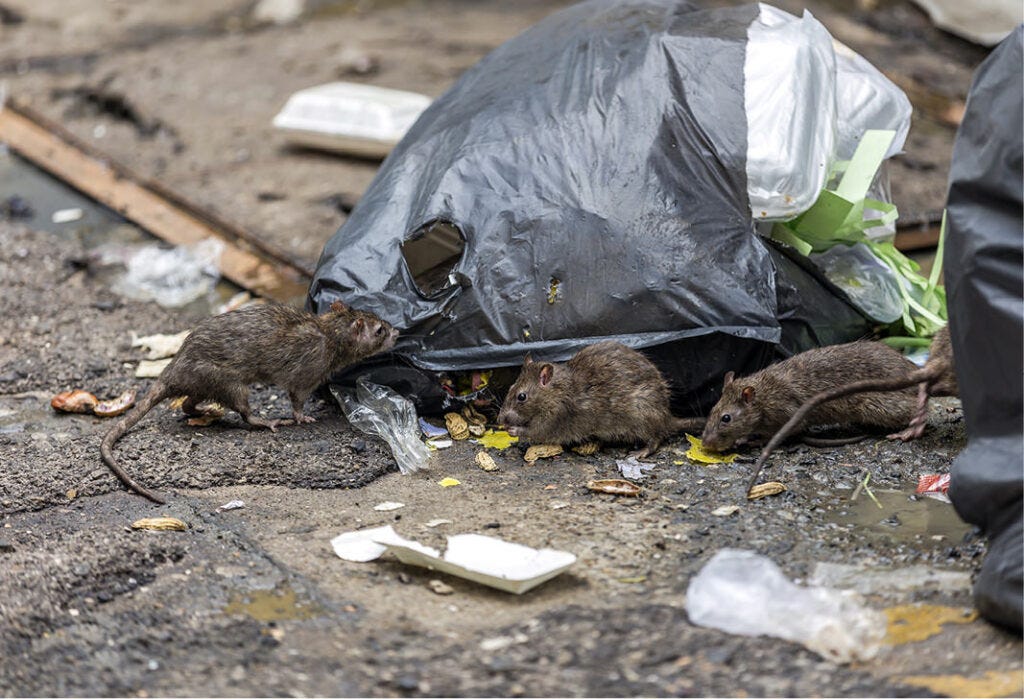
Photo 1: The rat hordes disproportionately harm minority and low income New York City neighborhoods. They are scourges on environmental justice, public health, and social equity.
We do not have to live like this.