Broken clocks.
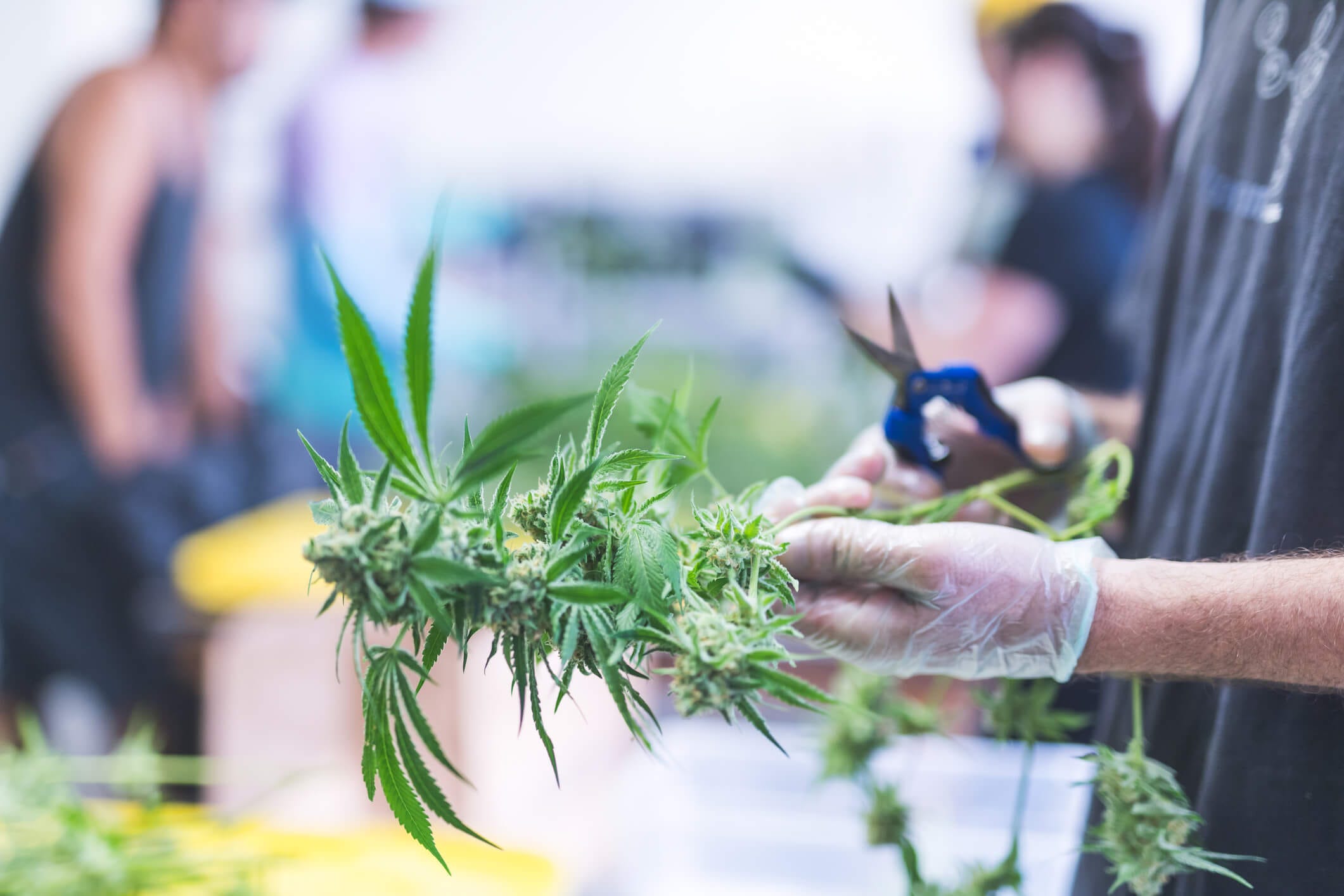
Very rarely the Trump administration gets something right. On December 18th, the President signed an executive order directing the Attorney General to “take all necessary steps to complete the rulemaking process related to rescheduling marijuana to Schedule III of the CSA in the most expeditious manner.” Rescheduling the drug from Schedule I to Schedule III would correctly identify marijuana as having moderate to low potential for physical and psychological dependence, in the same category as ketamine rather than heroin. This would be an easy gain for producers and consumers of marijuana, as well as the public’s understanding of possibly deleterious health effects by lowering barriers to research.
In response to the President’s diktat, the GOP did not relent from its anti-weed position. 22 Republican senators signed a letter opposing Trump’s rescheduling, identifying the only winner as “Communist China”, and the House Appropriations Committee approved a spending bill prohibiting the DOJ from using funds to reschedule marijuana. After pressure from Trump, that language was then removed. Trump once again bucked his party’s minoritarian position on this issue (64% of Americans support full legalization), and liberals scrambled to respond, either claiming the administration had not gone far enough, or worrying that “Trump and GOP could steal marijuana reform right out from under us”. We are left to wonder why did Biden not reschedule marijuana?
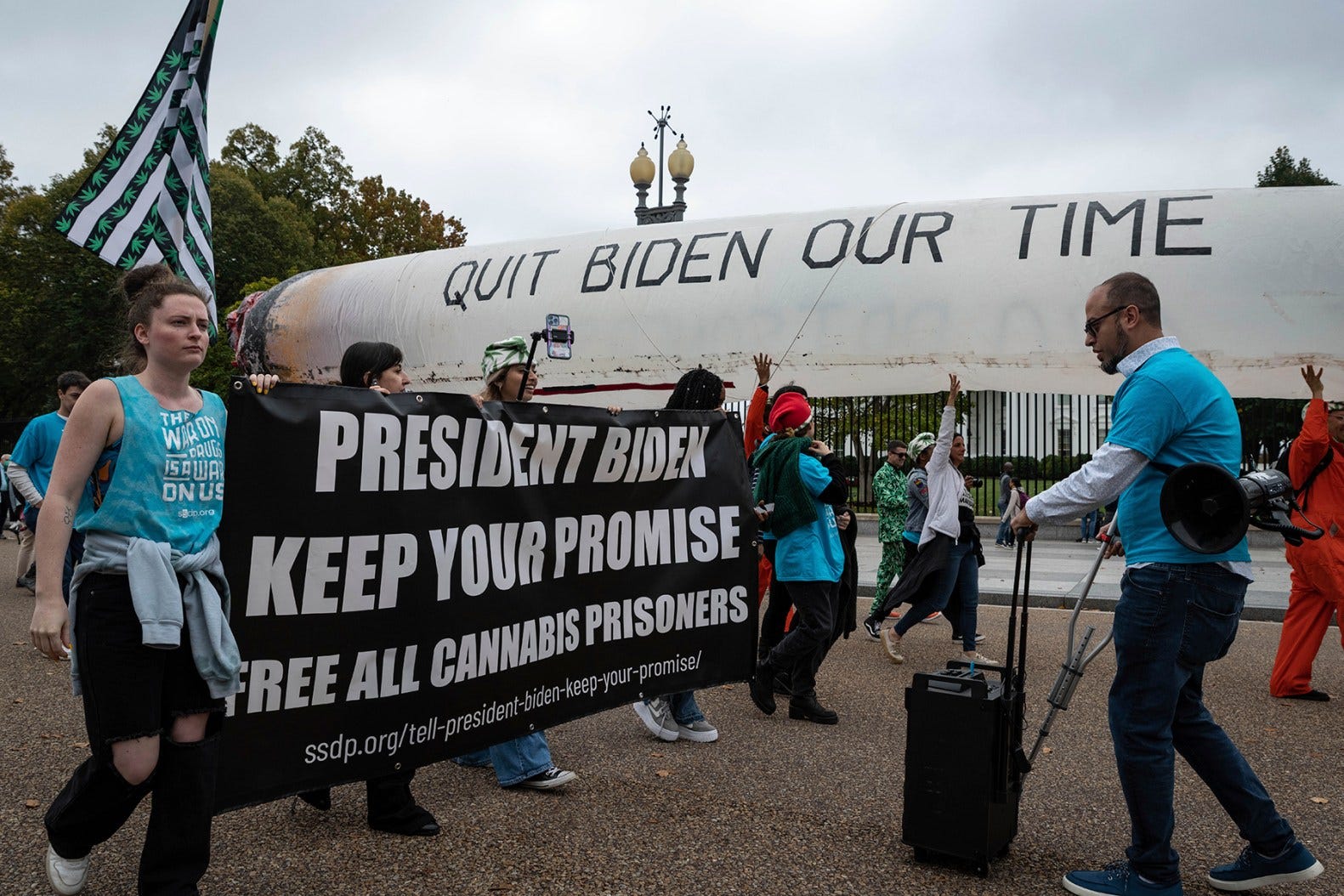
The Biden administration did in fact initiate the rescheduling process. It was just stuck in a procedural nightmare for more than two years.
In October of 2022, Biden directed HHS and the DEA to review marijuana scheduling.
Nearly a year later, after a scientific and medical evaluation mandated by the Controlled Substances Act, in August 2023, HHS recommended Schedule III, finding marijuana has “a currently accepted medical use” and lower abuse potential than Schedule I and II drugs.
Then, in January of 2024, HHS released an unredacted recommendation letter following an FOIA lawsuit.
In April, the DOJ Office of Legal Counsel issued its opinion that HHS’s scientific findings are binding.
After another month of deliberation, the DOJ published its Notice of Proposed Rulemaking in the Federal Register, opening up a 60 day public comment period, which closed in July with over 43,000 comments.
In August, the DEA announced it will hold the requisite administrative hearings. The agency spent a month selecting participants, announcing on October 28th a panel of 25 designated participants for hearings, including prohibitionist organizations like Smart Approaches to Marijuana. The Administrative Law Judge appointed to preside over the hearings then issued a preliminary order stating hearings couldn’t begin till January 2025 due to insufficient information from the DEA.
In December, a preliminary hearing was held.
The January 21st hearing was then cancelled by the Administrative Law Judge, as the process rolled into the new administration it was promptly cancelled. Trump then restarted it.
During this entire process, the Biden administration barely communicated to the public that it was taking this massively popular action. Harris stayed silent on the issue on the campaign trail, meaning that nobody besides marijuana industry insiders had any idea this was even happening. Even if Harris had been elected, the process would have continued through more procedural thresholds. During the two years Biden’s rescheduling process was mired in bureaucracy, over 400,000 Americans were arrested for marijuana violations, 84% for simple possession, all heading to court with the stigma of a Schedule I drug.Thousands of people were imprisoned for years longer than they otherwise would have as the Biden administration proceeded to administrative hearing after administrative hearing.
Instead of moving through this absurd labyrinth, the President could have invoked the Controlled Substance Act’s treaty exception, authorizing the Attorney General to immediately issue a Final Order rescheduling a substance when required to comply with international treaty obligations, bypassing the entire notice-and-comment rulemaking process, the public comment period, and the administrative hearings. Alternatively, Congress could have just rescheduled, or legalized, marijuana through legislation and fulfilled its purpose as the central body of our Republic. Marijuana rescheduling was frozen due to the utter paralysis of the Democratic executive and legislature. Alas.
Trump attempted to solve this problem by saying “expeditiously”, and it is likely he will be stuck in the same mess of litigation and procedure. Simple declarations, the usual tactic of the current administration, have no staying power and do not represent legitimate or effective governance. The left must have a deeper solution, a government legally empowered to respond to popular will, delivering real gains with urgency, before losing a winning mandate to an ever-frustrated public. This will require a recognition of the real tradeoffs involved, and a confidence to make decisions, to act, to govern.
The failure to reschedule marijuana was a failure for the executive branch to transfer a drug from one administrative classification to another, burdened by endless requirements limiting state capacity. Imagine now how difficult such a system makes it to build public housing or high speed rail, to lay down transmission lines or fund scientific research. Then imagine how impossible we would find establishing single-payer healthcare or a jobs guarantee.
This is what state capacity driven critics of the Democratic Party mean when we call for the deregulation of the government. Biden attempted to embark on a policy change beneficial to the public and supported by his party, but was locked into years of procedural litigation, hearings, and judicial intervention. To proclaim that this process is counterproductive and undemocratic is not to defend a theory of the unitary executive, or to disregard the left’s commitments to pluralistic integration of all sections of society into governance, but to ask how any of our objectives could ever be achieved under such constraints. Mayor Mamdani or a future President Ocasio-Cortez cannot sacrifice the progressive agenda on the altar of procedure. The future cannot die under bureaucratic review.